|
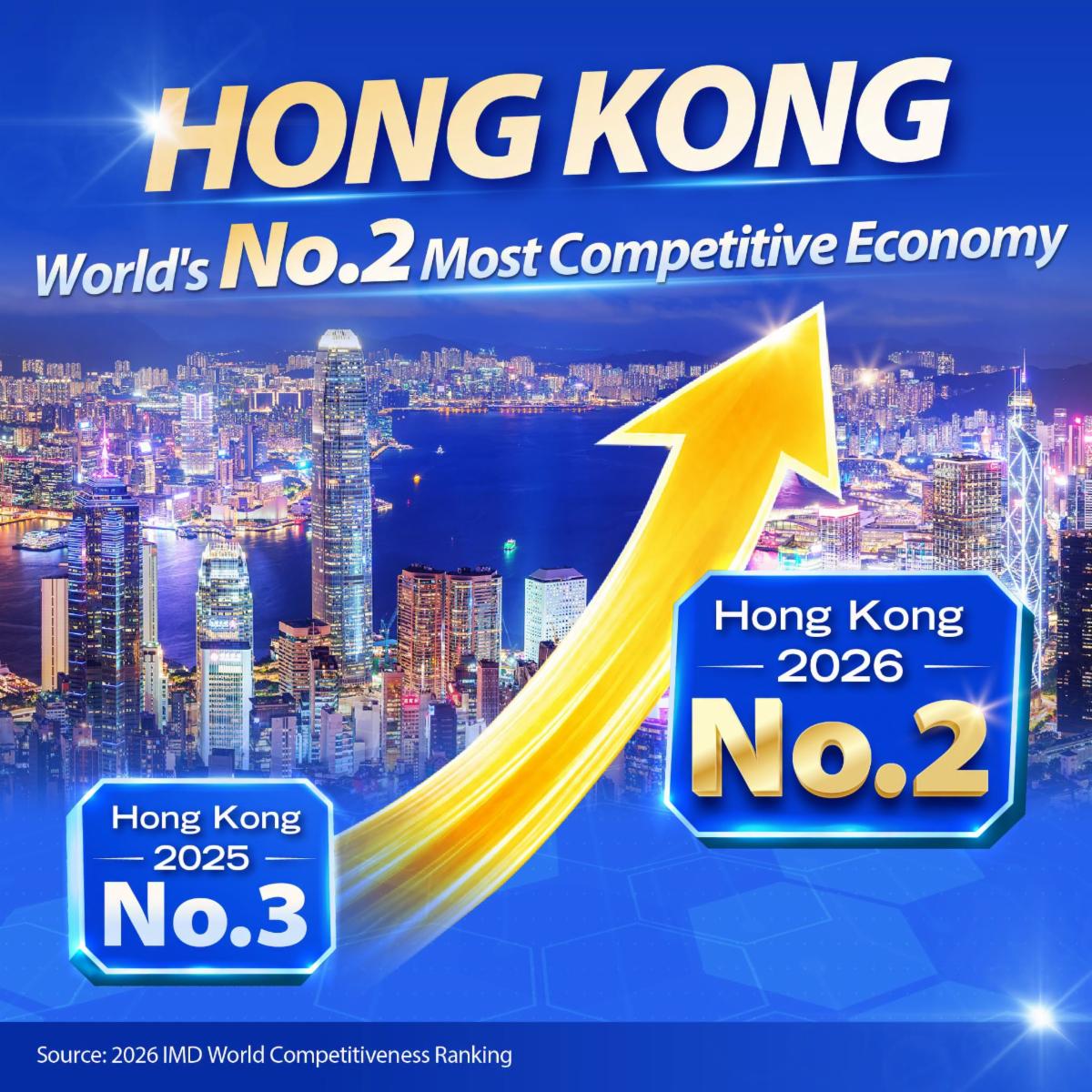
| Hong Kong ranks 2nd in global competitiveness | Hong Kong jumped one place to become the world’s second most competitive economy in the 2026 World Competitiveness Ranking published (Jun 18) by the Switzerland-based International Institute for Management Development. This marks Hong Kong’s highest ranking since 2019 and represents its third consecutive year of advancement. The Hong Kong Special Administrative Region (HKSAR) Government welcomed the result as reaffirmation of Hong Kong’s strong upward trajectory since 2024. Among the four competitiveness indicators, Hong Kong ranks second globally in government efficiency, third in business efficiency, eighth in infrastructure, and 11th in economic performance. The city also secured top positions in several sub-factors, ranking first in tax policy and business legislation; second in finance; third in international trade, international investment, management practices and education; and fourth in public finance and basic infrastructure. The Government attributed its government efficiency ranking to Hong Kong’s free, open, stable, predictable and business-friendly economic policies, as well as the international community’s trust in the city’s legal and regulatory environment. Its strong business efficiency score highlights the robustness of the city’s financial ecosystem, and internationally aligned business environment. | | Mainland government bond futures to be launched in Hong Kong | The HKSAR Government welcomed the Securities and Futures Commission’s announcement (Jun 18) that Mainland government bond futures will be launched in Hong Kong, marking a significant step in strengthening the city’s financial markets. Hailing the launch, Chief Executive John Lee said the move aligns with the National 15th Five-Year Plan’s support for Hong Kong’s role as an international financial centre. Since Bond Connect launched in 2017, the scale of Chinese bond assets held by overseas investors has steadily increased, rising from around RMB0.8 trillion in June 2017 to over RMB3 trillion in April 2026. Mr Lee said the initiative will further attract international investors to participate in the Mainland bond market and to hold renminbi treasury bonds on a long-term basis, and foster the healthy development of the treasury bond market, further consolidating Hong Kong’s position as an international bond centre. Financial Secretary Paul Chan described the launch as a pivotal step in enhancing Hong Kong’s renminbi product ecosystem and deepening mutual market access, further reinforcing Hong Kong’s status as the world’s leading offshore renminbi hub and international risk management centre. | |
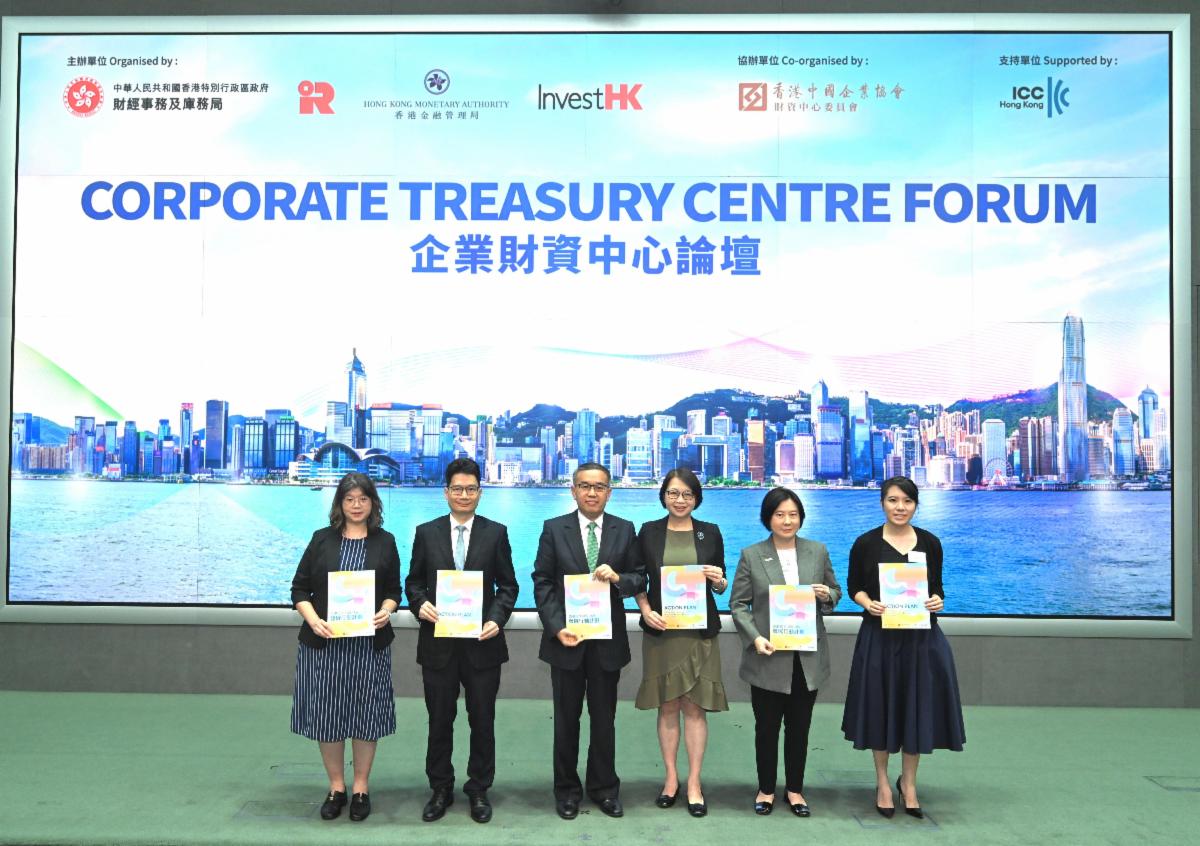
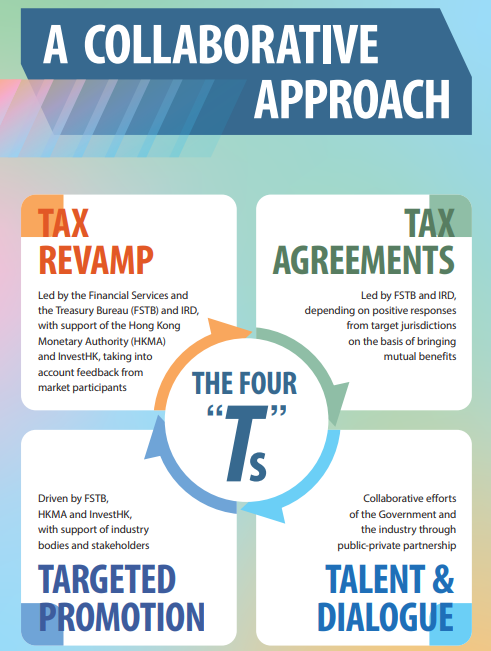
| | | Corporate treasury centre plan unveiled | Hong Kong launched (Jun 9) the “Action Plan to Promote the Development of Corporate Treasury Centres in Hong Kong”, setting out a strategy to develop the city into a premier hub for multinational corporate treasury centres (CTCs). Jointly formulated by the Financial Services and the Treasury Bureau, the Inland Revenue Department, the Hong Kong Monetary Authority and Invest Hong Kong, the plan aims to attract multinational corporations to establish CTCs in the city, while supporting existing ones in expanding their operations and leveraging the city’s comprehensive financial ecosystem. Adopting a “4T” framework – tax revamp, tax agreements, targeted promotion, talent and dialogue – the plan seeks to encourage corporations to centralise fund management, asset allocation and risk management in Hong Kong, positioning the city as a key platform for both inbound and outbound business. Secretary for Financial Services and the Treasury Christopher Hui said that amid global uncertainties, Hong Kong offers a safe, stable and highly predictable operating environment, urging enterprises to capitalise on the city’s unique advantages to consolidate capital and business operations in Hong Kong | | Hong Kong tests digital currency for after-hours derivatives trading | Hong Kong Exchanges and Clearing Limited and the Hong Kong Monetary Authority have launched (Jun 18) a pilot project to explore the use of e-HKD, a wholesale central bank digital currency operating on a 24/7 basis, for advance margin payments during the After-Hours Trading session in the derivatives market. The initiative will enhance the risk management capabilities of the derivatives market outside regular banking hours while maintaining existing operational workflows. It will also provide more flexibility and efficiency than the existing arrangement for advance margin payments. Clearing Participants will be invited to join Real-Value Trial Transactions of this pilot initiative on an optional basis. | |
| |
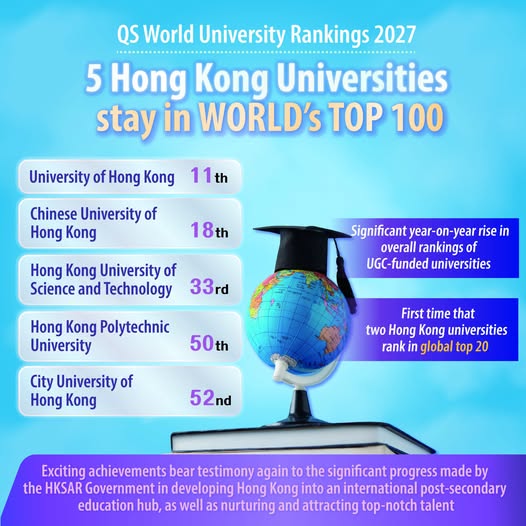
| Tax transparency law tightens | Hong Kong’s Legislative Council passed (Jun 17) the Inland Revenue (Amendment) (Automatic Exchange of Information) Bill 2026, strengthening the administrative framework for the automatic exchange of tax information with overseas jurisdictions. Under the new requirements, starting from January 1, 2027, reporting financial institutions must register with the Inland Revenue Department and maintain enhanced due diligence records. The legislation also introduces higher penalties for non-compliance. Secretary for Financial Services and the Treasury Christopher Hui said Hong Kong has all along been supporting international efforts in enhancing tax transparency and combatting cross-border tax evasion. He added that the reforms will help boost confidence in Hong Kong’s tax system and international tax treaty network. | | Five Hong Kong universities remain among world's top 100 | Hong Kong’s universities performed strongly in the latest QS World University Rankings, highlighting the continued excellence of the city’s higher education sector. Five universities funded by the University Grants Committee (UGC) remained among the world’s top 100. The University of Hong Kong retained 11th place globally, while the Chinese University of Hong Kong climbed 14 spots to 18th, marking the first time that two Hong Kong universities have ranked in the global top 20. The Hong Kong University of Science and Technology rose 11 places to 33rd, and the Hong Kong Polytechnic University entered the world’s top 50 for the first time by rising four places to 50th. City University of Hong Kong ranked 52nd. The rankings reflect the sustained commitment of Hong Kong’s post-secondary education sector to academic excellence and testify to the Government’s efforts to develop Hong Kong into an international education hub and a destination for top-notch talent. Continued investment in education and support through UGC have strengthened the city’s appeal as a premier hub for international global talent and advance innovation. | |
| Hong Kong Dragon Boat Festival season opens in Boston | The Hong Kong Economic and Trade Office in New York (New York ETO) supported the 47th Boston Hong Kong Dragon Boat Festival on June 14, marking the launch of the 2026 dragon boat festival season on the Charles River. More than 1,700 paddlers from 72 teams competed, with over 40,000 visitors in attendance. Speaking at the opening ceremony, the Director of New York ETO Maisie Ho highlighted the festival’s role in promoting teamwork, community spirit and the enduring ties between Hong Kong and the United States. She also underscored Hong Kong’s strong economic links with Boston and encouraged greater interest in the city’s innovation and technology sector. Beyond the exciting dragon boat races, the festival grounds buzzed with cultural performances, craft demonstrations and Asian culinary offerings. The New York ETO’s promotional booth attracted significant interest from participants and spectators alike. Boston was the first stop in the New York ETO’s annual dragon boat festival programme, with events in New York and Atlanta to follow. | | Hong Kong conductor Elim Chan lights up Central Park | The New York ETO proudly supported the New York Philharmonic’s “Concerts in the Parks”, featuring the brilliant Hong Kong conductor Elim Chan on the podium at New York’s iconic Central Park on June 10. In addition to Manhattan, she also led the orchestra in performances in Queens, the Bronx and Brooklyn. The Director of New York ETO Maisie Ho extended her warmest congratulations to Maestro Chan on a stellar performance, coming on the heels of her historic appointment by the San Francisco Symphony as its next Music Director – the first woman and 13th music director in the orchestra’s 115-year history. Born and raised in Hong Kong, Elim’s achievement marks a proud moment for both Hong Kong and the international classical music community. “Elim’s talent, dedication, and artistry are a true inspiration – proving that music has no borders. We are proud to once again support Elim in her musical journey since she made her debut at New York Philharmonic two years ago,” said Ms Ho. | |
| |
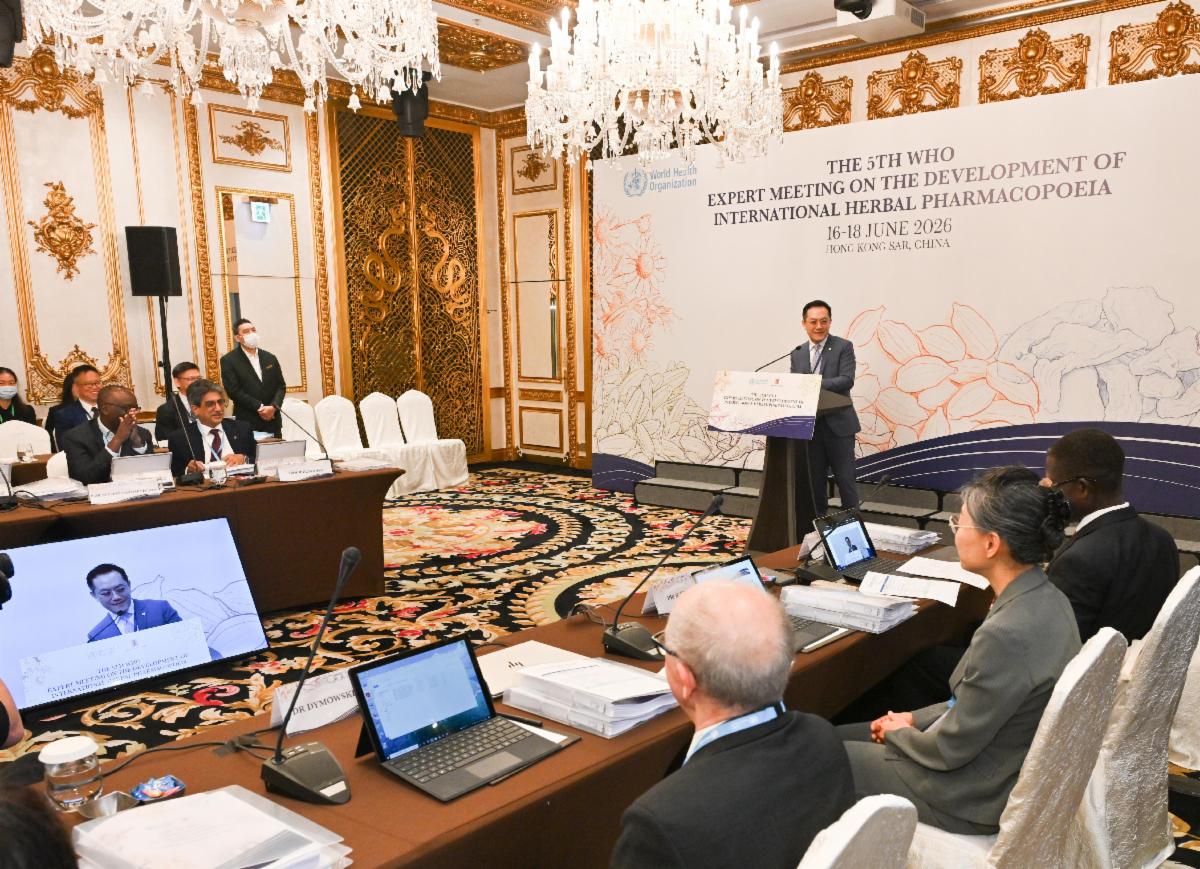
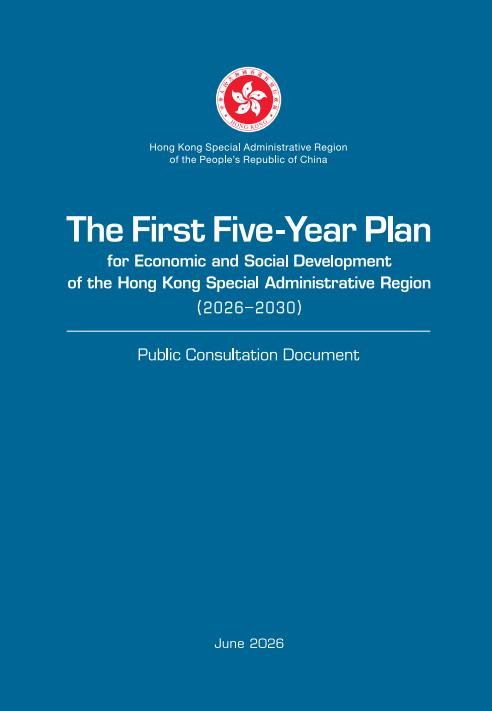
| WHO meeting in Hong Kong advances global herbal medicine standards | The World Health Organization (WHO) convened its three-day (Jun 16 – 18) expert meeting in Hong Kong to advance the development of the International Herbal Pharmacopoeia, gathering specialists from six WHO regions to develop harmonised global quality standards for herbal medicines. Hong Kong’s Department of Health, serving as the WHO Collaborating Centre for Traditional Medicine, supported the WHO in organising the event and contributed to drafting selected herbal medicine monographs. The initiative will strengthen regulatory oversight, improve the safety and quality of traditional medicines, and support their evidence-based integration into healthcare systems. | | ADMINISTRATION AND CIVIC AFFAIRS | | Consultation begins on Hong Kong’s first Five-Year Plan | The HKSAR Government has launched (Jun 15) a two-month public consultation on “The First Five-Year Plan for Economic and Social Development of the Hong Kong Special Administrative Region (2026-2030)”, with submissions invited until August 14. The plan will outline the city’s development vision and strategic directions for the next five years, covering key areas including economic development, industrial growth, spatial planning, infrastructure and green transformation, as well as livelihood issues such as healthcare, education, housing, social welfare and elderly care. Aligned with the country’s National 15th Five-Year Plan, the initiative will enable Hong Kong better integrate with national development and seize new opportunities. Key priorities include strengthening Hong Kong’s position as an international financial, maritime and trade centre, advancing innovation and technology development, accelerating the Northern Metropolis project and supporting growth in the Guangdong-Hong Kong-Macao Greater Bay Area. The final blueprint of Hong Kong’s Five-Year Plan is expected to be published within the third quarter of the year. | |
| |
| Government rebuts claims on national security regulation | The HKSAR Government strongly rejected (Jun 13) allegations made in relation to the Safeguarding National Security (Procedural Matters) Regulation in a Washington Post article, describing it as biased and reflective of double standards. The Government said that under international law and international practice, every sovereign state has the inherent right to enact laws safeguarding national security, noting that the US has 21 items of such laws. It also highlighted the well-established common law principle that the courts accord deference to the assessments and judgments of executive authorities on national security. Rebutting concerns about Hong Kong’s business environment, the Government pointed to the city’s track record as the world’s freest economy for decades, ranked among the world’s most competitive economies and a leading international financial centre. It stressed that foreign businesses have no reason to worry about the laws safeguarding national security in Hong Kong, with many entrepreneurs welcoming such laws, which ensure a safer and more stable environment for investment and economic development. | | |
The Basic Law (BL) is the constitutional document of the HKSAR. It provides the guarantees to maintain our existing way of life, including socio-economic development, the rights and duties of Hong Kong people, the rule of law and other areas. The Basic Law was put into effect on July 1, 1997.
Q: Does the HKSAR have its own system of taxation?
A: Yes. The HKSAR shall practise an independent taxation system. It shall take the low tax policy previously pursued in Hong Kong as reference and enact laws on its own concerning types of taxes, tax rates, tax reductions, allowances and exemptions, and other matters of taxation. (BL Article 108)
| | | | |